Hello — I’m Camille Dubois, and I’ve been tracking how platform changes ripple through marketing strategies for years. Apple’s latest privacy tweaks in iOS are another one of those moments where a single update forces marketers, advertisers and product teams to rethink assumptions about targeting, measurement and audience reach. I’ll walk you through what’s changed, why Facebook (Meta) ad targeting is affected, and practical steps you can take right now.
What exactly changed in iOS — the quick version
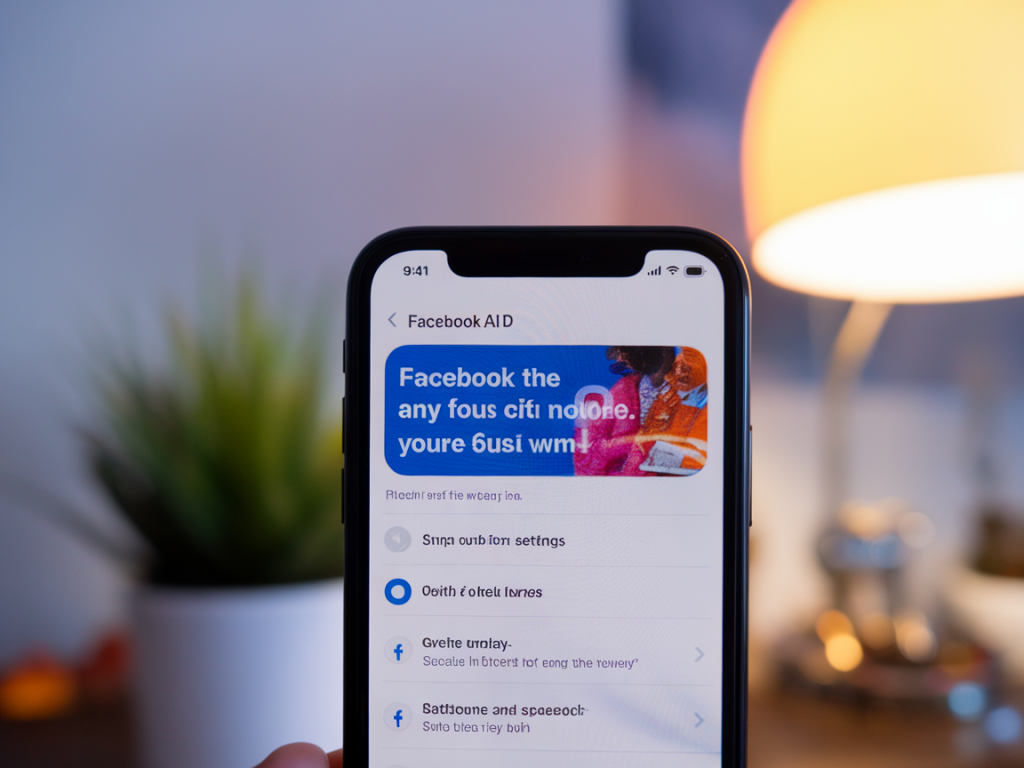
Apple has continued to tighten privacy controls after the initial App Tracking Transparency (ATT) rollout. The recent tweaks focus on two areas that matter most for advertisers:
More prominent and granular permission prompts: Users can now see clearer explanations and finer-grained choices about data sharing with apps and third parties.Limits on shared device signals: Certain device identifiers and cross-app signals are being further restricted or obfuscated.Put bluntly: iOS is making it harder for apps to stitch together user behavior across apps and sites without explicit, well-informed consent.
Why this matters for Facebook ad targeting
Facebook’s ad engine relies on dense behavioral signals and cross-context data to build audiences, optimize delivery and measure conversions. The new iOS tweaks undermine several parts of that pipeline:
Reduced signal volume: Fewer users opting in means Facebook receives less explicit cross-app activity to power behavioral targeting (Custom Audiences, Lookalikes, interest-based cohorts).Less reliable attribution: Obfuscated device signals make it harder to match ad clicks to downstream conversions, which impacts reporting and optimization algorithms.Higher reliance on modeled data: With gaps in observed data, Meta will increasingly lean on probabilistic modeling and aggregated learning methods to estimate outcomes — which changes how performance is attributed and optimized.Immediate impacts I’m seeing in campaign performance
From the campaigns I’ve monitored and advised on, expect these practical effects:
Audience sizes shrink or fragment: Custom Audiences built from app events or pixel data are smaller on iOS-skewed segments.Increased CPA and volatility: Optimization learns more slowly with noisier signals, so cost-per-action (CPA) rises and results fluctuate more.Measurement gaps: Direct last-touch conversions attributed to Facebook will undercount total conversions, particularly for mobile app installs and in-app purchases.What Facebook (Meta) has done — and what that means
Meta has been busy adapting: they’ve introduced Aggregated Event Measurement (AEM), enhanced server-side tracking (Conversions API), and more reliance on machine learning to fill data gaps. These are important fixes, but they’re not magic bullets.
Aggregated Event Measurement: Limits the number of conversion events and provides aggregated, delayed reporting to preserve privacy. That means less granularity for optimization.Conversions API (CAPI): Moves event data from client/browser to server, which helps restore signal if you can capture consented data server-side.Modeling and probabilistic attribution: Facebook will increasingly model conversions to compensate for missing signals — but models introduce uncertainty and require calibration.What marketers should do now — practical checklist
I recommend a balanced approach: shore up first-party data, diversify measurement, and adjust expectations for performance. Here’s a step-by-step checklist I use with teams:
Prioritize first-party data: Collect emails, phone numbers and logged-in behaviors via your own apps and sites. Use gated value (content, loyalty) to encourage sign-ups.Implement Conversions API: Work with engineering to send server-side events to Meta and other platforms. This recovers some signal lost in the browser/app layer.Get consent flows right: Make prompts clear and value-driven. Explain what users get in exchange for opting in (personalized experience, better recommendations).Segment by OS: Run separate experiments for iOS vs Android. That reveals where signal loss is happening and helps set realistic KPIs.Expand creative and funnel testing: With targeting noisier, test more creative variations and top-of-funnel tactics to keep reach efficient.Invest in measurement diversification: Use server-side analytics, cohort studies, and lift tests to validate causal impact beyond platform-reported conversions.Use probabilistic attribution wisely: Treat modeled outcomes as directional signals, not gospel. Cross-validate against offline or CRM data.How to talk to stakeholders about expected changes
I often help teams translate technical change into business impact. Here are key messages that work with execs and clients:
Be transparent about short-term friction: Explain that CPAs may rise temporarily as platforms re-learn with sparser signals.Highlight strategic benefits: This is an opportunity to strengthen first-party relationships, improve creative, and build resilient measurement.Set new KPIs: Include engagement, retention and LTV metrics that you can measure independently of platform reporting.Tech stack and partner recommendations
Not all tools are equal here. From my experience, these are worth considering:
Server-side tracking platforms: Segment, Snowplow or a custom events pipeline to centralize and control event data.Analytics and modeling: Look into tools that support cohort analysis and probabilistic attribution (e.g., Amplitude, Mixpanel, or specialized MMM providers).Consent and CMPs: Use a consent management platform that lets you test messaging and capture granular permissions.Quick reference table: targeting before vs after iOS tweaks
| Capability | Before (pre-ATT / earlier iOS) | After (current tweaks) |
| Cross-app behavioral signals | Broadly available via device IDs and SDKs | Reduced, requires explicit opt-in; more obfuscated |
| Custom Audiences size | Large and stable | Smaller, fragmented for iOS users |
| Attribution clarity | Relatively high (last-touch common) | Lower; platforms use aggregated and modeled attribution |
| Optimization speed | Fast (rich signals) | Slower due to noisier data |
What I’m personally watching next
I’m tracking a few signals closely: the percentage of users opting into tracking on the latest iOS versions, how Meta’s model accuracy improves with more CAPI adoption, and whether Apple introduces any more privacy-safe measurement APIs for advertisers. I’m also watching how smaller advertisers adapt — their agility will reveal new best practices faster than enterprise teams.
If you want, I can pull performance benchmarks from campaigns I’m tracking and share a short template for a consent messaging A/B test that has worked in past rollouts. Drop a note on the contact page at https://www.socialmeidanews.com and I’ll follow up with a practical checklist you can implement with your team.